Roundtable “Lebanon in the Eye of the Storm: War, Diplomacy, and State Survival”
Date of publication: June 7, 2026
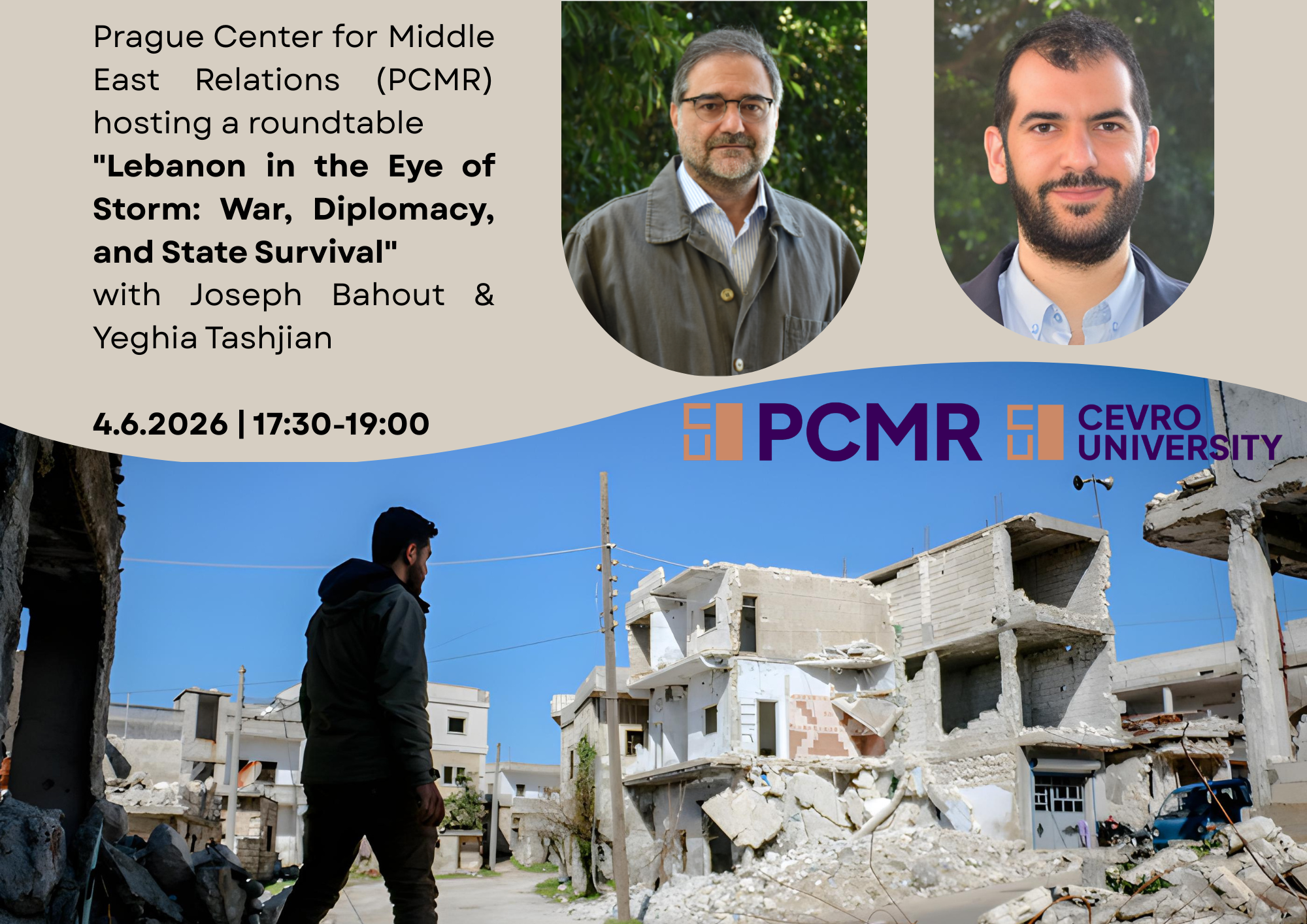
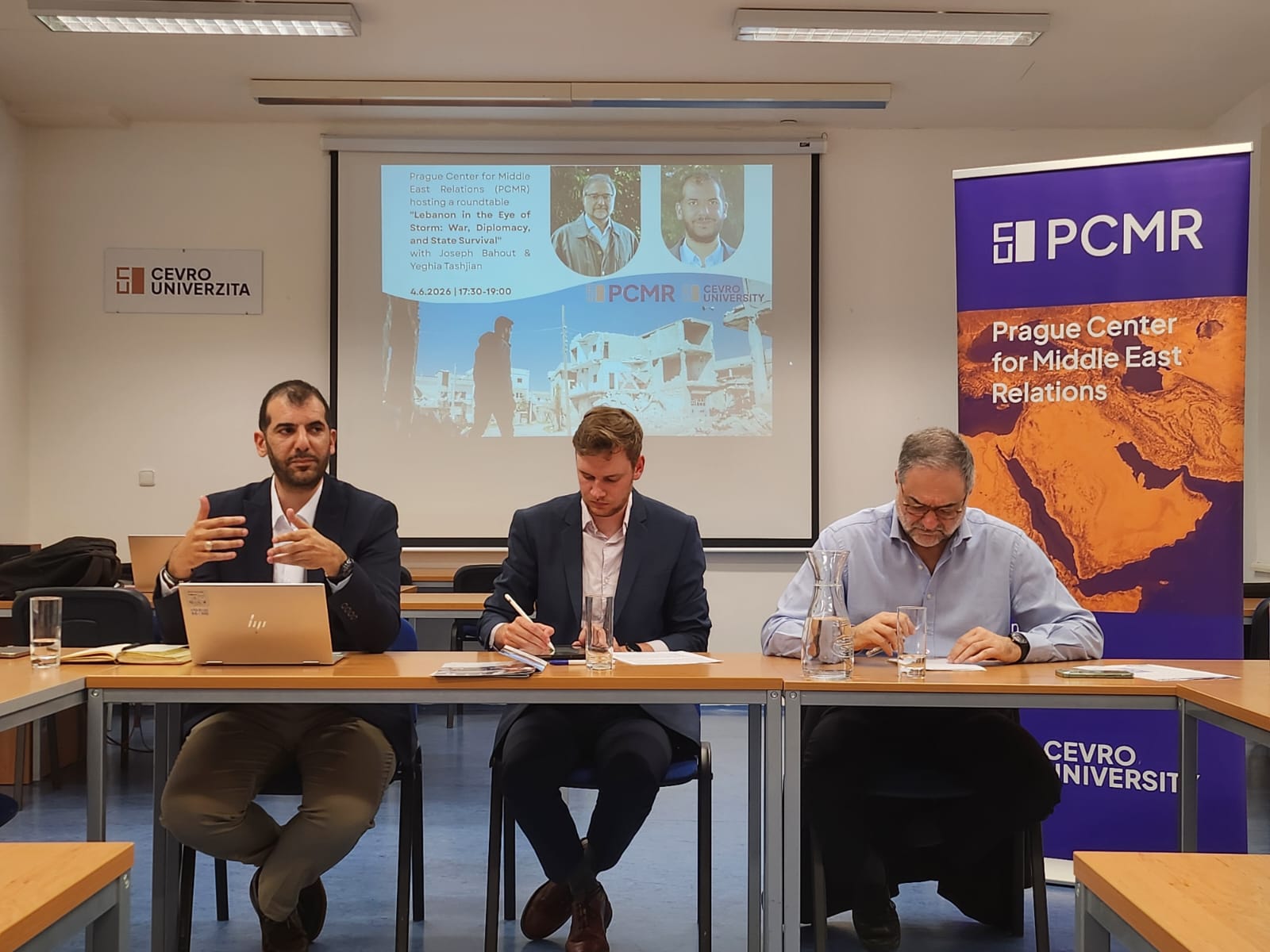
On 4 June 2026, the Prague Centre for Middle East Relations (PCMR) at CEVRO University organized a closed roundtable discussion titled “Lebanon in the Eye of the Storm: War, Diplomacy, and State Survival” with Prof. Joseph Bahout, Director of the Issam Fares Institute for Public Policy and International Affairs (IFI) at the American University of Beirut (AUB), and Yeghia Tashjian, Regional and International Affairs Cluster Coordinator at IFI-AUB.
The discussion was moderated by Filip Sommer, Director of PCMR. The event was held under the Chatham House Rules.
During the discussion, we focused on two major influences on Lebanon’s politics: the abiding legacy of the Lebanese Civil War and the role of the Taif Agreement in developing the modern political system. To provide a clear structure for the analysis, the speakers first examined how historical legacies and political agreements have shaped the foundations of governance, then discussed the continued impact of confessional power-sharing on Lebanese political institutions and competition.
Much of the debate focused on Hezbollah’s complex relationship with the Lebanese state. The speakers discussed how hard it is to separate Hezbollah, a powerful political force, from the government, since it has deep representation in state institutions. They paid particular attention to Hezbollah’s role in Lebanese politics and the military, as well as the challenges of limiting its influence.
The discussion also covered negotiations in Washington and rising international pressure for a political settlement in Lebanon. Speakers noted that Saudi Arabia and other regional actors seek greater stability in the country. Participants explored how external stakeholders shape Lebanese politics via diplomatic engagement, economic assistance, and political conditionality.
Another key topic was the Lebanese Armed Forces and the challenges in strengthening security institutions. The speakers examined the army’s armaments, its political independence, and the difficulties of confronting Hezbollah militarily. The discussion also touched on integrating Hezbollah fighters and personnel into state and society, and the political and security implications of doing so.
Finally, the roundtable explored the growing social and political pressures facing Lebanon. The discussion focused on debates over the confessional system and the distribution of power among communities. The speakers also assessed the regional effects of the Assad regime’s collapse in Syria and its impact on Lebanon’s politics, security, and future. The session revealed Lebanon’s obstacles and opportunities in an uncertain region.