Roundtable „Strategic Challenges for the Kurdistan Region of Iraq during the US–Israel–Iran Conflict”
Date of publication: August 13, 2026
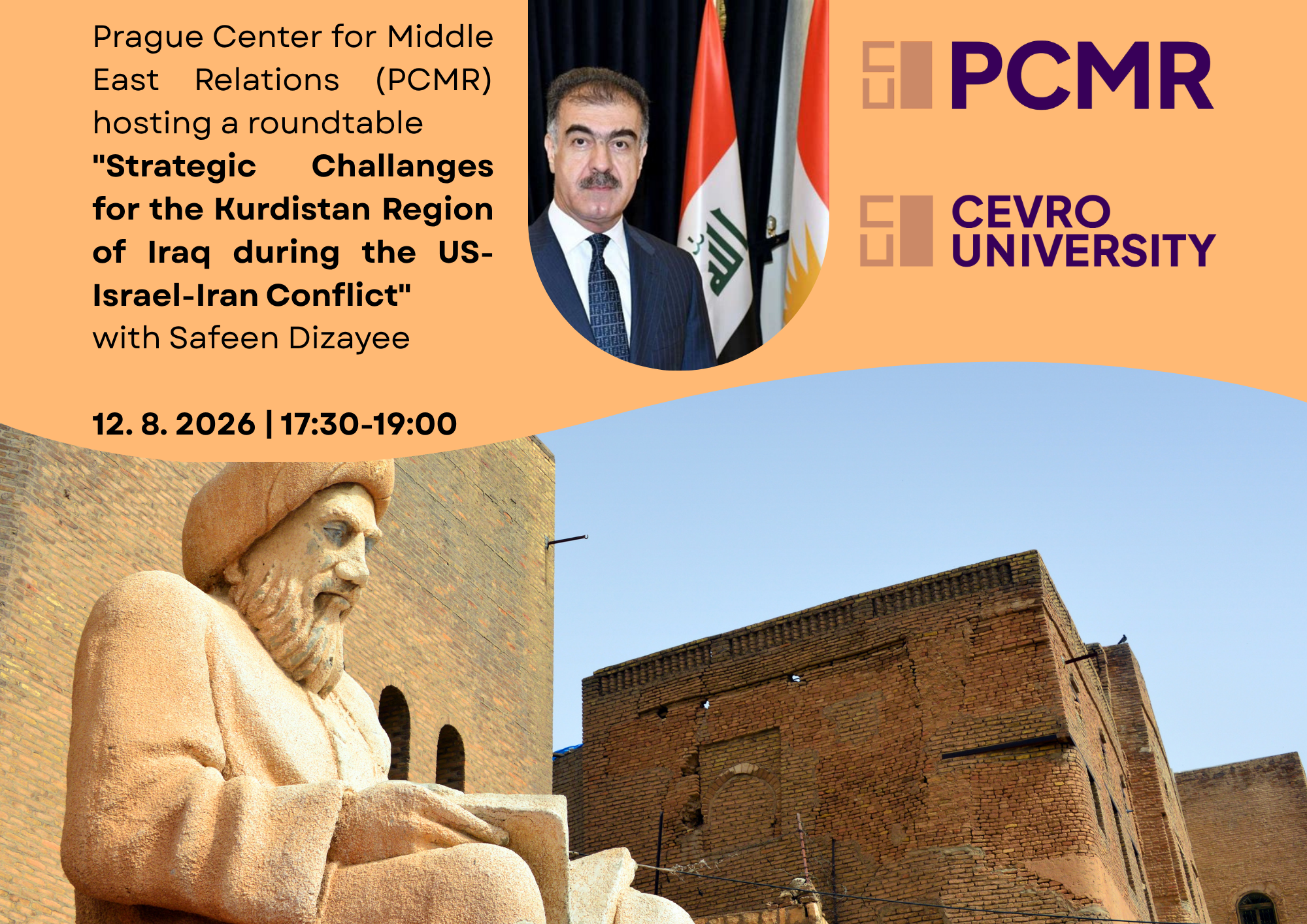
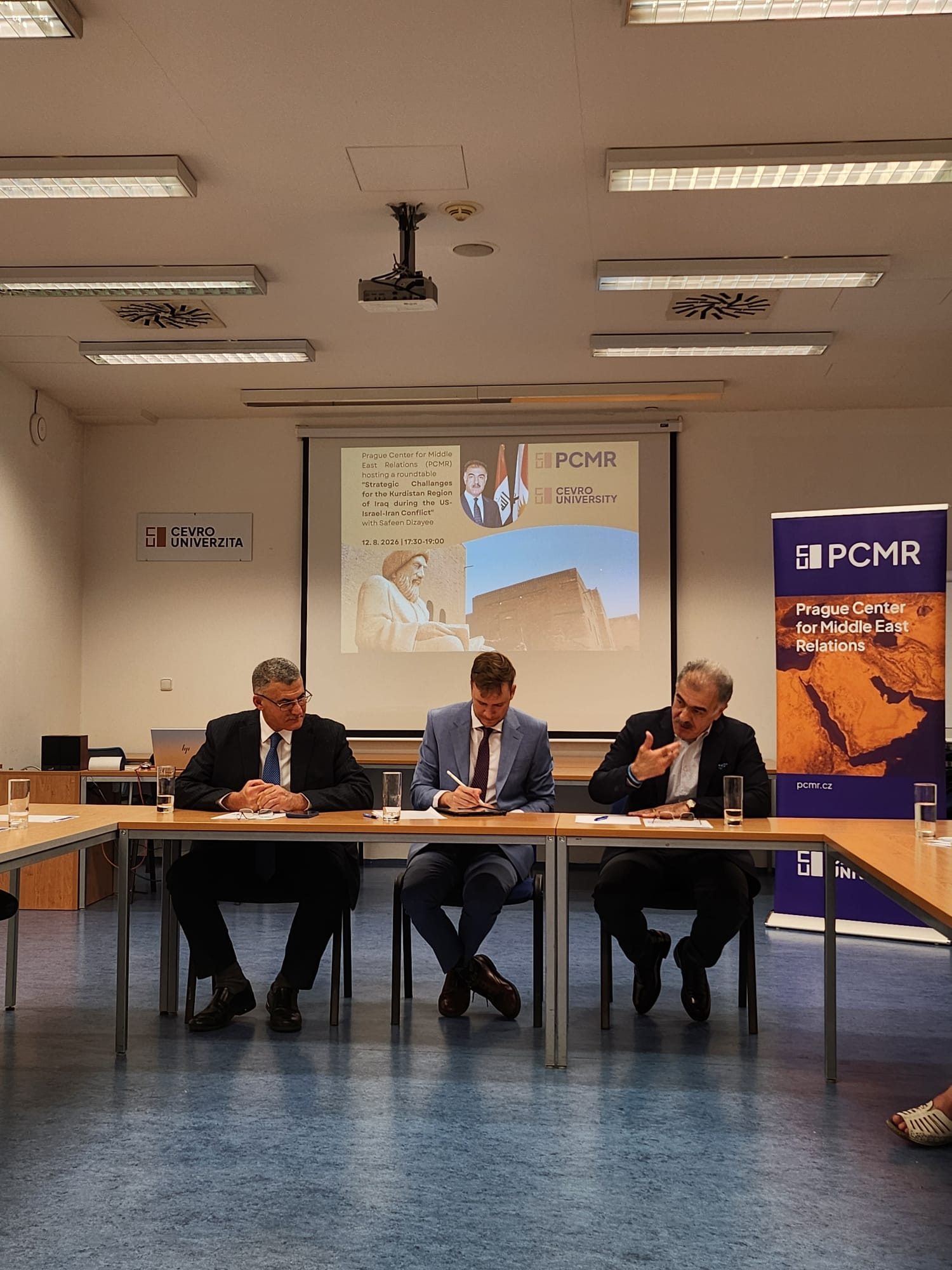
On August 12, 2026, the Prague Centre for Middle East Relations (PCMR) at CEVRO University organized a closed roundtable discussion titled „Strategic Challenges for the Kurdistan Region of Iraq during the US–Israel–Iran Conflict” with His Excellency Safeen Muhsin Dizayee, Minister and Head of the Department of Foreign Relations of the Kurdistan Regional Government (KRG). We would also like to thank Mr Hussein Mansoor Hussein Al-Safi, Chargé d’affaires a.i. at the Embassy of the Republic of Iraq in the Czech Republic, for his participation and contribution to the discussion.
The discussion was moderated by Filip Sommer, Director of PCMR. The event was held under the Chatham House Rules.
At the start of the roundtable discussion, the speaker briefly outlined the historical development of the Kurdistan Region of Iraq (KRI) and its status within the Iraqi state. He highlighted key milestones in Kurdish autonomy, including the 2017 independence referendum, its political consequences, and its impact on relations between Erbil and Baghdad. The discussion also highlighted the long-term challenges associated with the Kurdistan Region’s position within the Iraqi constitutional system and its efforts to advance its own political and economic interests.
A significant part of the debate was devoted to the security situation in Iraq and the future of the US-led international coalition. Speaker recalled the withdrawal of coalition forces from Iraq in 2011, their return in 2014 in response to the rapid expansion of the Islamic State of Iraq and Syria (ISIS), and the current plans to end the mission by the end of September 2026. In particular, the discussion centered on whether the Iraqi security forces are prepared to assume full responsibility for the country’s security and what consequences the withdrawal of coalition forces might have for the stability of the KRI. The speaker drew attention to the continued presence of ISIS cells in Iraq and Syria and to the possibility of their resurgence should international security cooperation weaken. He also addressed the issue of increasing activity by armed non-state actors and a potential rise in attacks, which could negatively affect the security situation in the KRI and across Iraq as a whole.
Another topic was the relations between the KRG and Iran, as well as the broader regional geopolitical context. The speaker analyzed how Erbil is seeking to balance its relations with Tehran whilst maintaining close cooperation with the United States and other Western partners. Attention was also paid to the new defense pact between Turkey, Pakistan and Saudi Arabia and its potential implications for the regional security architecture and the balance of power in the Middle East.
In the final part of the roundtable discussion, participants turned their attention to the future of the Kurds within the broader regional context. The discussion focused on the position of Kurdish communities in Syria and Turkey, their relations with central governments, and the possible implications of current regional changes for their political ambitions, security, and the future development of the Kurdish question in the Middle East.