Prague Centre for Middle East Relations
The Prague Centre for Middle East Relations (PCMR) was established in September 2019 as an internal research, education and advisory facility of CEVRO University.Recent Activities
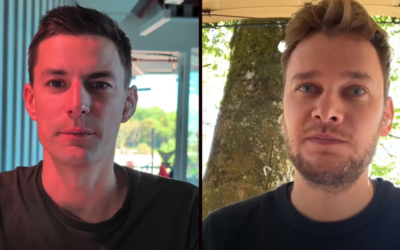
Commentary on the 25th anniversary of the 9/11 attacks for INFO.CZ
On September 10, 2026, Filip Sommer, Director of the Prague Centre for Middle East Relations (PCMR) at CEVRO University, spoke to INFO.CZ about the transformation of the global security landscape 25 years after the terrorist attacks of September 11, 2001. In the interview, he focused on the long-term consequences of the war on terror, developments in the current terrorist threat, and the impact of US interventions in the Middle East.
Commentary Marking the 25th Anniversary of the 9/11 Attacks
On 8 September 2026, Filip Sommer, Director of the Prague Center for Middle East Relations (PCMR) at CEVRO University, commented on how the terrorist attacks of 11 September 2001 transformed the global security environment. The attacks were carried out by al-Qaeda against targets in the United States, including the World Trade Center towers and the US Department of Defense.
Comment on Iran’s Designation of Radio Farda as a Military Target
On 27 August 2026, Filip Sommer, Director of the Prague Center for Middle East Relations (PCMR) at CEVRO University, commented on the latest escalation surrounding the Iranian armed forces’ designation of Radio Farda, part of Radio Free Europe/Radio Liberty, as a military target.

Message of the PCMR Director
The Middle East and North Africa (MENA) are currently experiencing significant transformations, including persistent conflicts, sociodemographic changes in population structure, and growing challenges such as climate change and economic instability. These processes not only affect regional security and stability but also profoundly impact international politics, including the interests of Central Europe. Events like the Syrian conflict, developments in Iraq, the war in Gaza, the question of the Abraham Accords, and the increasing influence of Russia and China are altering the overall geopolitical landscape in the region.
Despite developments in the region directly impacting global energy and financial markets, migration, and security issues, including the persistent threat of terrorism, these topics do not receive sufficient attention in the academic and political spheres of the Czech Republic and Central Europe.
Mission
-
Our primary mission is to deepen the understanding of the rapidly evolving security, political, and social dynamics in the Middle East, particularly in light of events such as ongoing regional conflicts, normalization efforts, and shifting alliances. Through research on current and politically relevant topics, we strive to provide insights that are crucial for informed decision-making.
-
We also focus on formulating recommendations that address the challenges and opportunities arising from these changes, to support decision-making processes not only in the Czech Republic but throughout the Central European region. The growing influence of the Middle East on global energy markets, migration trends, and regional security directly impacts Central Europe, making it necessary to adapt our policies to these challenges.
-
Furthermore, we are committed to enriching the academic, political, and public discourse on the Middle East by exploring how developments in this region influence European domestic and foreign policy. This includes understanding the impact of Middle Eastern dynamics on European security, economy, and social cohesion.
Vision
-
-
Our goal is to fill the growing need for deeper analyses of the social, economic, and political processes in the Middle East within the Czech Republic and Central Europe, with a focus on the region’s turbulent dynamics.
-
-
-
We aim to become a leading research institution in Central Europe, focusing on publishing high-quality and politically relevant outputs on developments in the Middle East, particularly concerning recent geopolitical changes, energy transitions, and security challenges.
-
-
-
We are determined to foster deeper academic, public, and media discussions about the Middle East, especially at a time when changes in the region increasingly influence European security and energy policy. In this way, we seek to identify and proactively address emerging threats and opportunities brought about by these rapid changes.
-
Partners, Donors, Sponsors, and Supporters